
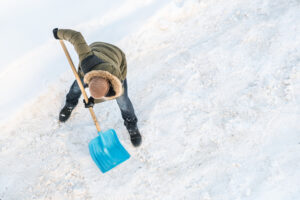
 Each winter, our Clinic will see our fair share of shoulder, neck and low back injuries caused by snow shovelling. Snow shovelling, especially during wet and heavy snow falls, produce physiological demands similar to high intensity workouts. One study showed that shoveling a 15 meter pathway of a snow depth of 10 cm of wet snow produced peak heart rates of 86% of maximal heart rate at the 2 minute mark and 97% at the 10 minute mark (154 and 173 beats per minute, respectively)! The physiological demands were comparable to exercising maximally on an arm ergometer (arm pedal bike) and treadmill running. This explains the cardiovascular events we sometimes hear about from bouts of heavy snow shovelling.
Due to the current Covid pandemic, many people have switched to working from home and are spending longer hours working virtually in less than ideal ergonomic conditions. As a result, our practise has seen an increased incidence of neck and low back pain and headaches. We have even seen this in young children and students as they spend longer hours using computer devices. If this is happening during the summer months, we can anticipate a greater incidence of these conditions as we approach the winter months when people are inevitably more sedentary. Coupled with the ongoing cancellations of recreational activities and sporting events as a result of Covid, many patients have reported a sharp decline in physical activity and exercise. People are simply sitting more and exercising less.
Also, any activity or exercise that is performed too much and too quickly has always been a risk factor for musculoskeletal injuries. If someone has not run in months or years, then a gradual return to this activity is strongly advised. This should include walking initially, and slowly progressing to longer periods of running over several weeks to months, depending on a person’s fitness level and health status.

In the instance of snow shovelling, it is therefore understandable how musculoskeletal injuries and cardiovascular events can occur. We simply are not prepared for the demands of this activity especially if we have been sedentary or if we have not exercised the muscles necessary for this activity. Shovelling requires repeated trunk flexion and extension loading of our spine plus strong use of our neck and shoulder muscles to push, lift, carry and throw snow. The activity requires both strength and endurance especially of our “posterior chain” muscles: shoulder rotator cuff, shoulder blades, spine and hip muscles that unfortunately are not exercised especially in sitting postures. Imagine sitting for long periods of time and then performing a high intensity workout (without a warm up) and it is understandable how injuries can occur.

Lastly, the greatest risk factor for future injuries is an unresolved pre-existing injury. That nagging low back pain that is felt with sitting will likely worsen as we pick up our shovels this winter. Why do we switch our automotive summer tires to winter? Is it not in preparation for the driving conditions of winter, to prevent an accident before it happens? This fall, I would encourage you to do the same for your body. Whatever activity or sport you are planning on participating in this winter, and yes, this includes snow shovelling, it is best to be prepared. Let’s get started!
Submitted by: Albert Chan
References:
Franklin, BA et al. Cardiac demands of heavy snow shoveling. JAMA 1995 Mar 15;273(11):880-2